
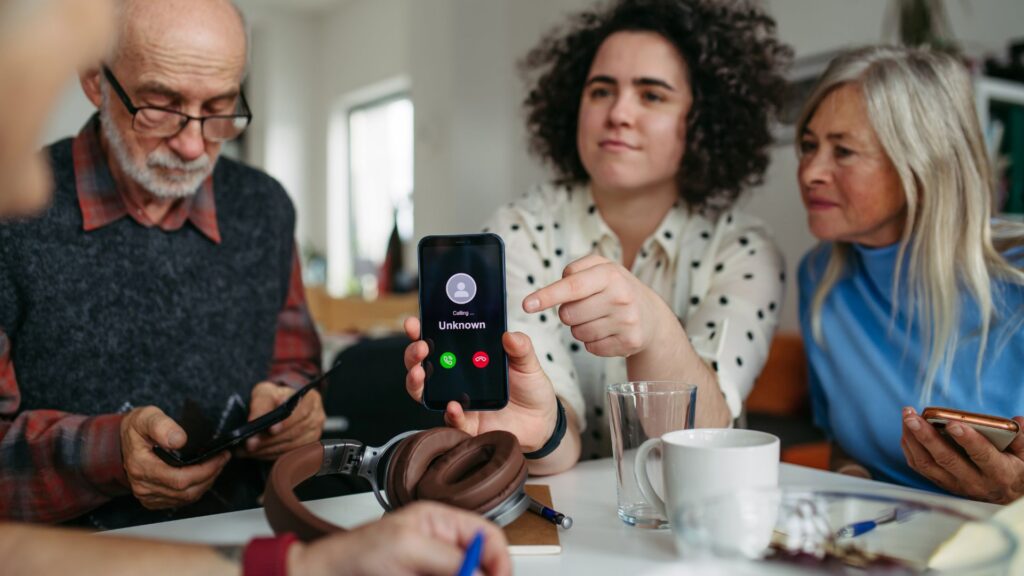
Have you ever experience a suspicious call and you check the caller ID to calm your nerves? Sadly, caller ID is not reliable in today’s technologically advanced world since scammers can successfully spoof phone numbers.
What is a Spoofed Phone Call?
Scammers alter phone numbers to make caller ID look like it is from a legitimate source, such as a friend or an organization, to defraud the receiver. Many scammers use Neighbor Spoofing to increase the number of answered calls; this type of spoofing displays a local area code to influence the receiver to pick up the call.
Once the call connects, scammers will use impersonation tactics to hide their identity, earn the person’s trust, and steal confidential information. Often times, scammers ask for social security numbers, account numbers, identifying information, and more.
One example is the fake-emergency situation. A person receives a call with a caller ID that appears to be a family member or friend’s name. If the receiver answers, the scammer pressures them to act quickly by saying their relative or friend was arrested and needs bail money.
Quick Tip: If a phone call pop’s up with the “potential spam” or “spam” labels on the caller ID, the number may have been spoofed already.
These are the signs of a Spoofed Call:
The tell-tale signs a phone number is spoofed are based on behaviors of the caller and the experience. Norton, a leader in cyber security, outlines common patterns of a spoofed call.
- Requesting personal information or payment
- Unfamiliar number, but a recognizable caller ID
- Bullying and pressuring you to react
- Caller ID display name is different from the person’s contact information
How to protect yourself against spoofed calls:
There are several ways to protect yourself against spoofed calls. You should never answer unknown calls, nor freely give out confidential information when responding to an unexpected caller.
If you answer an unknown call, and it seems suspicious, stay silent, hang up, and call a verified phone number to confirm if the original request was legitimate. Furthermore, never engage in an opt-out recording, especially if it instructs the listener to hit a particular button on their device. This is a tactic scammers use to see if the line is active.
Another way to prevent an influx of scam calls is to block or simply not answer suspicious or unknown callers, and using spam-blocking features provided by personal devices.
Stay financially sound by staying alert!
About Penn East Federal Credit Union
“Have a positive impact on our members, our community, and each other.” That is the common thread that goes across all of Penn East Federal Credit Union’s endeavors. With over eighty-five years in business and 24,000 members, the community-oriented credit union is a vital part of Northeastern Pennsylvania. Penn East FCU serves Luzerne, Lackawanna, Wayne and Wyoming counties with four branches and a 24/7 digital banking service through their website www.penneastfcu.org and their Penn East Mobile Banking App. Penn East FCU provides trusted financial solutions, integrity, and reliability to its members and community.